
Namibia’s Quiet Capability Gap: Leading People Through Change
By Robert Smith|
Many organisations are not being held back by a lack of strategy or funding, but by a weaker, less visible capability: executing change when people are tired, anxious, and stretched.
Across boardrooms, leadership teams are having sharper conversations than ever. Costs must come down. Roles must shift. Operating models must simplify. Customer expectations keep rising. Most organisations, in Namibia and beyond, are not short on ideas about what needs to change.
The real constraint shows up after the strategy deck is approved.
Execution under change is where momentum breaks. Not because leaders do not care, but because carrying people through disruption is harder than it looks, and it is rarely treated as a core leadership discipline. It is often delegated to a project plan, or to a single communication, or to HR after decisions have already landed.
I have seen strong strategies fail for human reasons that never appear in the business case:
Fear, because the future feels unsafe and people protect what they have.
Fatigue, because change has become constant and the organisation asks for resilience without removing load.
Unclear roles, because new structures are announced but decision rights are not, and teams default to old ways of working.
Poor communication, not in volume but in quality, where leaders share updates yet avoid the hard “why”, the trade-offs, and what will be different for individuals.
In a market facing skills shortages and cost pressure, these human dynamics become amplified. When capacity is tight, every change creates competition for attention. When headcount is constrained, “doing change” is added on top of full workloads. When uncertainty rises, rumours fill gaps faster than official messages. The result is familiar: delays, rework, silent resistance, quality issues, and the slow erosion of trust.
This is why change management should be positioned less as a project tool and more as a leadership capability.
Leaders who can execute change well do a few things consistently. They translate strategy into clear expectations for different groups, not generic slogans. They actively build alignment across the leadership team so that employees do not get mixed messages. They define roles and accountability early, so the organisation knows who decides, who recommends, and who executes.
They engage managers as the primary channel of credibility, equipping them to have real conversations, not simply cascade slides. They listen for friction and respond quickly, because resistance is often information about what is unclear, impractical, or emotionally costly.
Most importantly, they treat adoption as the outcome, not activity. A system has not changed because it launched. A restructuring has not succeeded because boxes moved on an organogram. Change is only real when people work differently, consistently, and with confidence.
For Namibian organisations, this is a practical opportunity. In a nascent market, those who build strong change leadership now can move faster, keep talent, and protect performance during disruption. Those who ignore it will keep paying the hidden tax of stalled initiatives and repeated “relaunches”.
The question for executives is straightforward: do we have the capability to lead people through the harder decisions ahead?
At and Change, we see growing demand for leaders and practitioners who can turn decisions into sustained adoption. That is what a robust certification should provide: not training for its own sake, but practical preparation to lead change when pressure is real, timelines are tight, and the human factors are the difference between success and drift.
If your organisation is confident about what must change, but less confident about how to bring people with you, it may be time to build that capability deliberately.
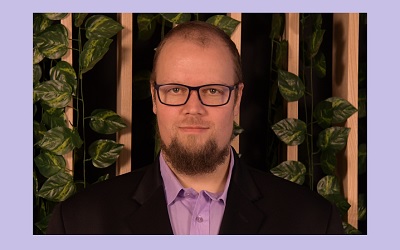
– Robert has a decade-long tenure at “and Change” and currently holds the role of Senior Copywriter while also serving as a Change Management Solution Designer. Write to him at info@andchange.com or learn more at andchange.com.