
By Kleopas Nghikefelwa|
Why do we remember Tate Nakambale Dr/Rev. Martin Rautanen’s birthday anniversary on 10 November 2026, and why is he historically significant in Namibian society? And why should we visit Nakambale Museum during our holidays in northern Namibia?
Dr. Rev. Martin Rautanen was born on November 10, 1845 in a village called Tikanpesa in Russia although he was Finnish by language and family. He is remembered on his birthday anniversary because he was a foundational pioneer of the Finnish Mission in northern Namibia and a central figure in the cultural and religious history of the Aawambo people.
Today in northern Namibia, we have many baby boys and men called “Martin” or “Meitina”, which shows how his name is historically significant in Owambo society.
According to Wikipedia, the name Martin means “of Mars,” “warlike,” or “warrior,” coming from the Latin name Martinus, which is a derivative of Mars, the Roman god of war and fertility.
According to AI overview, here below are some points listed why Dr. Rev. Martin Rautanen (“Nakambale”) is or should be more respected in Namibian society.
Bible Translation and Literacy: Rautanen translated the entire Bible into Oshindonga (completing the New Testament in 1903 and the Old Testament by 1920), alongside publishing hymnals and catechisms. This standardised the written language and laid the groundwork for modern education in northern Namibia.
Nicknamed “Nakambale”: Affectionately known by locals as “Nakambale” (meaning “the one always with the basket” or hat on his head or the man with the distinctive round hat). He was always wearing (embale) a hat on his head to protect himself from the daily hot sun, and for that reason local people named him Nakambale. He lived and worked at the Olukonda mission station in Owamboland for 56 years (from 1870 until his death in 1926).
Foundation of the Lutheran Church: His extensive evangelical work directly contributed to the deep-rooted presence of the Evangelical Lutheran Church in Namibia (ELCIN), making Christianity a cornerstone of local society.
Building Infrastructure and Education: He constructed northern Namibia’s first church in 1889 and the historic mission house at Olukonda (now preserved as the Nakambale Museum), and helped coordinate the ordination of the first local Oshiwambo-speaking pastors in 1925.
Scientific and Cultural Contribution: Beyond religion, he made notable ethnographic, meteorological, and botanical collections, working alongside visiting scientists to document the region’s flora. His legacy is also well documented in a book titled “NAKAMBALE-The life of Dr. Marttin Rautanen”, written by Martti Pertola, published by FELM in 2002.
To learn more about the history of Dr. Martin Rautanen and his contribution to the mission work in Owambo please you are welcome to visit the Nakambale Museum, in Oniipa town (near Olukonda ELCIN parish) with your family and friends, especially during school holidays, weekend and December (Christmas holiday).
Here you will experience how he contributed to the bridging of the long-lasting good friendship/diplomacy between Finland and Namibia, through the mission work (1870-1926).
Here you can enjoy your holiday with your family and friends at Nakambale’s lodge rooms, glamping, and campsites. There’s also a licensed good restaurant (known for local dishes and outdoor oven pizza), a swimming pool, a bar, and conference facilities.
For more information you are welcome to call Mrs. Magdalena Kaanante, the manager at the Nakambale Museum in Olukonda, using the following contact numbers:
- Mobile: +264 81 249 3108 (or +264 81 249 310)
- Landline: +264 65 245 668 (or +264 65 240472)
- Email: olukonda.museum@elcin.org.na or nakambale@scadvlodges.com
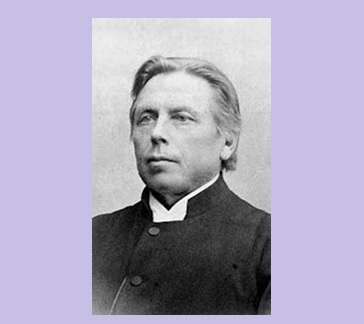
In the photo: Dr. Reverend Martin Rautanen, popularly known as Nakambale.
– This article was prepared by Mr. Kleopas Nghikefelwa, a heritage tour guide and Museum Curator at Onandjokwe Medical Museum. Email: kleopasn@gmail.com/mobile: 0812755616.