
Women as economic architects
By Fransina Kahungu |
For too long, the language of women’s empowerment has been framed around assistance, access and inclusion. We speak of women as beneficiaries of land reform, beneficiaries of grants, beneficiaries of procurement quotas, beneficiaries of training.
While these interventions have been necessary and meaningful, they cannot be the ceiling of our ambition.
In March 2025, Her Excellency Dr. Netumbo Nandi-Ndaitwah was sworn in as the first female President of the Republic of Namibia. Her leadership symbolised progress, unity and national pride. A stark reminder that women are not in leadership positions for pity, but because women are able.
From the beginning of her tenure, it has been categorically clear that her mark in history goes beyond her gender and symbolism. Her election infiltrated the vocabulary of women across the world and not only in Namibia.
She shattered the words that were engraved into many, “It is not possible,” and ensured that endless possibilities were the horizon of women from all corners of the earth.
Many questioned whether her election would yield fruits, and 11 months later, she has proven that hard work, capacity and competence speak for themselves.
Women are not meant to sit at the edge of the economy waiting to be included when the world is ready.
Women must design it. Not because they are symbols but because they are capable and because, in the year 2026, women should not be required to wait for the world to be ready or wait for permission, nor wait for a quota to be included, but actively construct the world for a better future with or without permission.
A few years ago, we would say that “The time has come to shift the paradigm from women as participants in an economy built by others, to women as architects shaping the very structure of that economy,” but in 2026 we say, “Women ARE shifting the paradigm from women as participants in an economy built by others, to women as architects shaping the very structure of that economy.”
This is not an anomaly, nor does it require the world to be “ready” for women to lead.
Throughout our liberation struggle, women were organisers, mobilisers and strategists. They built underground networks, sustained communities and protected families under the harshest conditions.
They were never passive recipients of history. They were builders of it.
That same spirit now defines our economic era. If we are honest, structural inequality persists not because women lack potential, but because systems were not originally designed with women in mind.
Access to capital remains uneven. Land ownership patterns still disadvantage many women. Informal traders carry entire households on their backs, yet remain outside formal financial systems.
Procurement systems, while reformed, still require navigation skills and networks that many emerging women entrepreneurs are only beginning to build.
The response cannot be permanent dependency on empowerment programmes. The response must be redesigned.
However, economic architecture requires more than passion. It requires preparation. As the Women’s Council, we are now actively investing in policy literacy, financial governance training and enterprise structuring.
We are cultivating women who understand balance sheets, public budgets, procurement law and investment negotiations. Leadership in the economic space demands competence, not symbolism.
At grassroots level, the economic power of women is already visible. Informal markets, agricultural cooperatives, cross-border trade and small enterprises are sustained largely by women.
The Women’s Council is now striving to organise this existing strength into coordinated economic blocs, cooperatives with bargaining power, savings groups that graduate into investment vehicles, and mentorship pipelines that turn traders into manufacturers.
The Women’s Council carries both a political and moral responsibility.
If we mobilise women during election seasons, we must equally mobilise them into economic decision-making spaces between elections and remind them that they are not symbols or existing to prove themselves. They are the fruits of those who have fought for our inclusion before.
We no longer fight for inclusion as though they are doing us a favor. We walk in it fully aware of what we carry and what we have to offer.
We must therefore declare, with clarity and conviction, that women are not beneficiaries of the economy – women are architects of it.
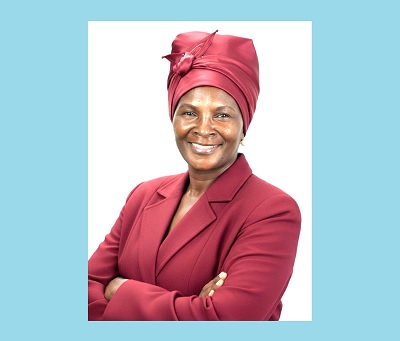
– Fransina Ndateelela Kahungu is a renowned Namibian politician and a formidable force in public leadership. She previously served as Deputy Mayor of Windhoek in 2016 and 2017, and later as Mayor of Windhoek from 2019 to 2020, where she demonstrated steady, principled and people-centered governance.
In 2022, she was elected Secretary of the SWAPO Party Women’s Council, a role in which she continues to shape national discourse on women’s empowerment with clarity and conviction. She is not merely an advocate for women’s advancement, but a strategic champion of women’s competitive leadership, firmly focused on building real capacity for women to thrive in the marketplace, in governance and in positions of influence.
Kahungu stands as a giant in Namibia’s political landscape, a leader whose work is grounded in discipline, courage and an unwavering belief that women must not only participate, but lead, compete and excel at the highest levels.