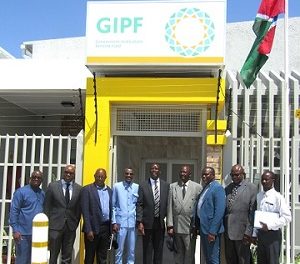

The Government Institutions Pension Fund (GIPF) says its investment in the Königstein Affordable Housing Fund (KAHF) is expanding access to housing while supporting employment and economic activity across Namibia.
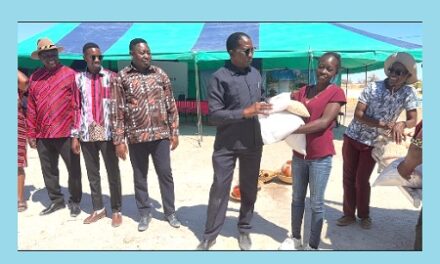
Speaking at the opening of KAHF’s housing development at Kuisebmond Extension 16, GIPF Chief Investment Officer Immanuel Kadhila said 40 homes had been completed, with a further 40 expected by the end of March 2027.
GIPF views Namibia’s housing shortage as a pressing developmental challenge that requires sustained investment in affordable homes and serviced land. The Fund believes institutional capital can help expand access to formal housing while supporting employment and broader economic development.
Housing affordability remains one of Namibia’s most significant challenges. While the average home costs nearly N$1.5 million and requires a monthly income of approximately N$44,000 to finance, more than half of Namibian adults earn N$2,000 or less per month, leaving many households excluded from the formal housing market.
GIPF noted that while its primary responsibility is to safeguard and grow members’ retirement savings, it also pursues long-term investments that generate sustainable returns while contributing to Namibia’s economic and social development.
Over the past five years, the Fund has invested about N$1.6 billion in affordable housing and a further N$1.5 billion in home-loan finance.
Collectively, these investments have facilitated the construction of more than 7,800 homes and the servicing of nearly 5,900 residential plots nationwide, making a tangible contribution to addressing the country’s housing backlog.
GIPF also offers a Pension-Backed Home Loan Scheme, enabling members to use a portion of their pension benefits to buy, build or improve a home.
Under its new strategic plan, GIPF will continue to consider investments in housing, serviced land, infrastructure and employment-generating businesses, provided they meet the Fund’s return requirements.
Königstein Affordable Housing Fund (KAHF) is one vehicle through which this strategy is being implemented.
Managed by the fully Namibian-owned Königstein Capital, KAHF has completed 1,133 housing units, equivalent to 69% of the 1,633 units in its current portfolio plans. Its projects have also created 615 jobs and delivered housing and serviced plots across 11 projects in four regions. KAHF’s current pipeline focuses on housing development in Erongo, Kavango and Khomas region.
Construction is under way in Swakopmund, Walvis Bay and Windhoek. Projects include 40 units in Mondesa, with an option to develop another 80; 13 units at C-Breeze; 205 houses at Tama; and 17 units at Turnstone Villas in Tamariskia, which have been completed.
In Walvis Bay, the PAM Tree development provides for 185 serviced plots and 185 houses. In Windhoek, 32 units are under construction in Khomasdal.
The Ridge in Rocky Crest has completed 19 units and plans a further 17, while Mango Cove at Otjomuise Extension 10 has 64 units in progress and another 19 expected before September 2027.
KAHF’s total development pipeline is expected to provide a further 5,083 residential units and serviced plots across Ongwediva, Karibib, Windhoek, Rundu, Katima Mulilo, Ondangwa, Lüderitz and Omaruru.
GIPF said narrowing Namibia’s housing gap would require sustained collaboration among government, local authorities, developers, fund managers, financiers and institutional investors.
The Fund described the Kuisebmond development as an example of how long-term capital and local implementation capacity can deliver homes, create jobs and strengthen communities.
In the photo: GIPF’s Chief Investment Officer Mr Immanuel Kadhila.