
By Tueripura Mundingi |
What does a mining project mean for a small town before the first tonne is produced?
For communities in places like Leonardville, in Namibia’s Omaheke Region, the answer is not only about what may happen years from now. It is also about things people can see today: school meals, skills training, small local jobs – and whether young people can imagine building a future closer to home.
Life in Omaheke is closely tied to farming, public sector work and small local businesses. These sectors form the backbone of the local economy and provide stability for many families. At the same time, there is a need for additional opportunities – especially for younger people looking for steady work and a chance to stay in the region rather than leave in search of better prospects.
This is where larger projects can play a role. They do not replace existing ways of life, but they can add something new. Even before production begins, they can bring employment, training programmes and demand for local services.
When people hear the word “mining”, they often imagine heavy trucks, dust and large pits in the ground. But many resource projects begin much earlier and affect communities in less visible ways. This can include local procurement, training programmes, school support, environmental monitoring and new small businesses that grow around a project.
One such project is being developed in Omaheke by Headspring Investments. It is currently at the exploration stage, with the company assessing whether uranium extraction is possible and under what conditions.
The project is based on in-situ recovery (ISR), a method that looks very different from the image many people have of mining. Instead of digging a large open pit, ISR uses wells to access uranium underground.
It can only be applied in specific geological conditions, where natural rock layers separate the target zone from water used for drinking and agriculture.
The process is carried out under continuous monitoring of groundwater and well conditions, and is subject to strict regulatory control. Compared to more traditional mining methods, it generally requires less surface disturbance and more compact infrastructure.
Beyond the technical side, what often matters most locally is how such projects affect everyday life.
In Leonardville, some of these changes are already visible. A school feeding programme supported as part of the project helps ensure that children receive regular meals during the school day. Kitchen facilities have also been developed to make the programme more sustainable over time.
There has also been a focus on skills development. Training initiatives offer practical skills – such as welding and plumbing – that can help young people find work in different sectors. Access to bursaries creates further opportunities for those who want to continue their education.
For local businesses, even relatively small contracts can make a difference. Work in areas like transport, catering, maintenance or security creates additional income streams and supports the wider local economy. Over time, this can help build a more stable environment for families.
The impact of these efforts can be felt in different ways. In the short term, support such as school meals and infrastructure improve daily life. In the longer term, skills training and education can open up new paths and give people more options and greater confidence about the future.
Across Namibia, this approach is not unique to one project. Other companies operating in the uranium sector, such as Rio Tinto, Paladin Energy and China National Uranium Corporation, have also supported education, training and local development initiatives alongside their operations.
While the details may differ, the idea is similar: resource projects are increasingly expected to contribute not only economically, but socially as well.
At the same time, development does not happen in isolation. Projects like these are part of a wider conversation that includes environmental responsibility and government oversight. These factors remain essential, especially where natural resources and water systems are involved.
In the end, the discussion around mining in Namibia is not only about what is taken out of the ground. It is also about what is left behind – in the form of skills, opportunities and a more secure future for the communities where these projects take place.
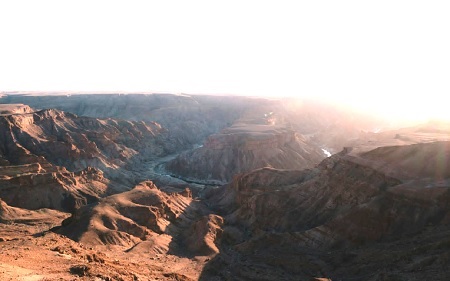
In the photo: Mining activities are common in Namibia’s mountainous areas.