
For many years, gender-based violence (GBV) reporting in Namibia has often focused primarily on the incident itself — a crime, a quote, a broadcast — and then silence.
While the public was informed, survivors sometimes continued to carry the longer-term consequences. For many survivors, what happens after the headline fades can matter most.
In closely connected communities, anonymity can be fragile. A neighbourhood reference, a family connection or a brief description of a house — details that may appear harmless on air — can reveal a survivor’s identity in real life.
Reporting intended to expose violence can, if not handled carefully, unintentionally extend harm through stigma, retaliation or isolation.
Today, efforts are underway to further strengthen survivor-centred reporting practices.
A Shift Across Newsrooms
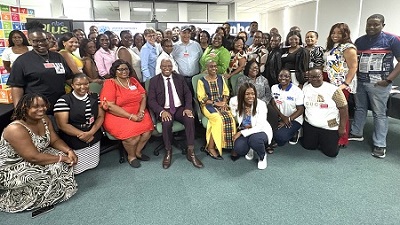
In December 2025, more than 50 media professionals — including programme managers, producers, presenters and technicians — gathered in Windhoek for a “Do No Harm” training and dialogue on ethical GBV reporting.
The engagement was convened through a partnership between the United Nations, the Southern African Broadcasting Association (SABA) and the Namibian Broadcasting Corporation (NBC), with support from media development partners working on gender equality and prevention.
The training forms part of ongoing collaboration to strengthen responsible journalism practices and support survivor-centred reporting across Namibia’s media landscape.
For Ann Bereng, a producer at NBC’s Tirelo Ya Setswana, the experience marked an important turning point.
From Reporting to Protecting
Bereng describes her earlier reporting as largely event-driven, relying heavily on police statements and court records. Accuracy was always a priority, but she had not fully considered how framing, language and contextual details might affect survivors after publication.
In the fast pace of daily news production, these decisions can seem routine — but for survivors, they can carry lasting consequences.
During the training, journalists reviewed real GBV coverage and examined how headlines, wording and imagery influence public perception.
“That’s when I realised how one descriptive detail can either protect a survivor or put them at risk,” she says. “Responsible reporting isn’t only about accuracy — it’s about protection.”
Since then, her editorial decisions have evolved. In one case, she removed a neighbourhood reference that would previously have been included for context. The details were not necessary for public understanding but could have identified the survivor within the community.
“Feedback later indicated that the survivor felt more comfortable seeking counselling — illustrating how careful reporting can support recovery rather than retraumatise.
Growing Impact Beyond One Journalist
The shift is not limited to one newsroom. Across participating media houses, editors are increasingly reviewing headlines more carefully, questioning imagery choices and consistently including national helplines such as 106 and 116.
These adjustments are helping reinforce survivor protection while maintaining public awareness.
Law-enforcement officials note similar benefits. Sensitive and accurate reporting can support investigations, while premature or overly detailed coverage may unintentionally create risks for survivors or affect due process.
Ethical journalism therefore plays an important role in balancing public information with protection and justice.
The training also addressed emerging risks in the digital environment, including online harassment and manipulated content.
As artificial intelligence increasingly draws from published media, responsible reporting is becoming an important safeguard for both individuals and the integrity of information ecosystems.
UN–SABA Partnership Driving Change
By combining SABA’s regional media expertise with the United Nations’ technical guidance, the partnership is helping strengthen and institutionalise ethical reporting standards across participating media houses, while advancing progress toward the Sustainable Development Goals (SDGs).
UN Resident Coordinator Hopolang Phororo underscored the importance of the initiative, noting that responsible journalism is a critical partner in advancing gender equality and justice in Namibia.
“When media reporting protects survivors and upholds dignity, it strengthens both public trust and access to justice. Partnerships such as this are essential to ensuring that no survivor is left behind,” she said.
The engagement aligns with the United Nations Sustainable Development Cooperation Framework (UNSDCF) and global commitments including the Beijing Declaration and Platform for Action, the Sustainable Development Goals and the UN Global Essential Services Package for Women and Girls Subject to Violence.
Looking Ahead
Building on this momentum, the United Nations and SABA are exploring opportunities to expand ethical reporting support to additional regions and media houses, while strengthening collaboration with the GBV Protection Unit and promoting continued knowledge exchange across the broadcasting sector.
The changes taking place in newsrooms may appear modest — a removed detail, a reframed sentence, a more careful headline. Yet each editorial decision can influence whether survivors feel safe enough to seek services, report abuse or tell their stories.
As Bereng reflects: “We don’t just report violence — we influence whether it continues.”

In the photo: Tirelo Ya Setswana news producer Ann Bereng. In the main photo, the NBC top management and Mrs Hopolang Phororo, with the participating media professionals. (article by UN Namibia.)