
In most families, dignity isn’t something anyone really teaches you. It’s there while you’re growing up, and you pick it up along the way without even realising it.
This is the view of Mathews Nambandi, the Outapi Sales Branch Manager.
Nambandi states that dignity is seen in how people speak to elders, and in the small things that get done without anyone needing to say anything. And it shows up in habits more than in words.
“It’s just understood that certain things matter, even if no one explains why,” says Nambandi.
“You probably don’t think about it much at the time. It only really becomes clear how important it is when someone passes away. Because then a funeral isn’t just another event to organise. It becomes something more than that.
“It’s about showing respect, properly, one last time. About acknowledging a life that had an impact, whether in big ways or in quieter ones that you only start noticing later. “
And in those moments, Nambandi points out, what people do tends to say more than anything they could try to put into words.
“For many families, there’s a kind of heaviness that comes with it. Not dramatic, not always spoken about, but it’s there. You feel it in how careful people are, in how seriously everything is taken. There’s this underlying need to get things right, to honour someone in a way that feels fitting.”
The reality is that a lot of families arrive at that moment without much having been planned beforehand. So while they are still trying to process the loss itself, they’re also pulled into making decisions almost immediately.
“There are costs to think about, people to coordinate, expectations from different sides,” he says. “Things move quickly, sometimes faster than people are ready for.
“And then financial pressure often comes into it as well, which complicates things even more.
“What should be a time focused on being together can easily turn into trying to manage everything at once. Conversations become rushed. People worry about things they didn’t expect to have to worry about in that moment. It shifts the whole experience slightly, even if no one says it out loud.”
Nambandi points out that planning ahead doesn’t take that moment away or make it easier emotionally, but it can change how everything around it feels.
“Even a small bit of preparation helps more than people expect. It means fewer decisions have to be made under pressure. Fewer unknowns. Things don’t feel as scattered.
“There’s at least some structure to fall back on, which makes a difference when everything else feels uncertain.”
He says that funeral cover is part of that, in a very practical sense.
“It’s not something that has to be complicated or deeply analysed. It’s simply one of the ways to make sure there’s some support in place, so families aren’t left trying to figure everything out all at once.
“It doesn’t solve everything, but it does take a bit of the weight off. And sometimes, that’s enough to change the experience in a meaningful way.
“There’s also something else in it, something a bit harder to explain but still there. The people who raised us did what they could, often without making a big point of it. They just showed up, consistently, in ways that mattered over time.”
Planning ahead, Nambandi says, feels, in some way, like a continuation of that. Not a grand gesture. Just something practical that carries meaning.
“It’s not something that needs to be overexplained.
“In the end, it isn’t really about fear, or pressure, or even obligation.
“It’s more about a quiet decision. Wanting to do things in a way that feels right, and that, later on, makes things a little easier for the people who matter most, even if they only fully realise it when the time comes.”
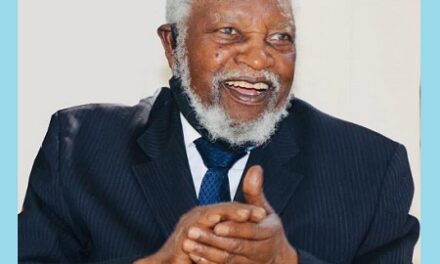
In the photo: Mathews Nambandi, Outapi Sales Branch Manager, for Retail Mass Business, at Old Mutual Namibia.
.